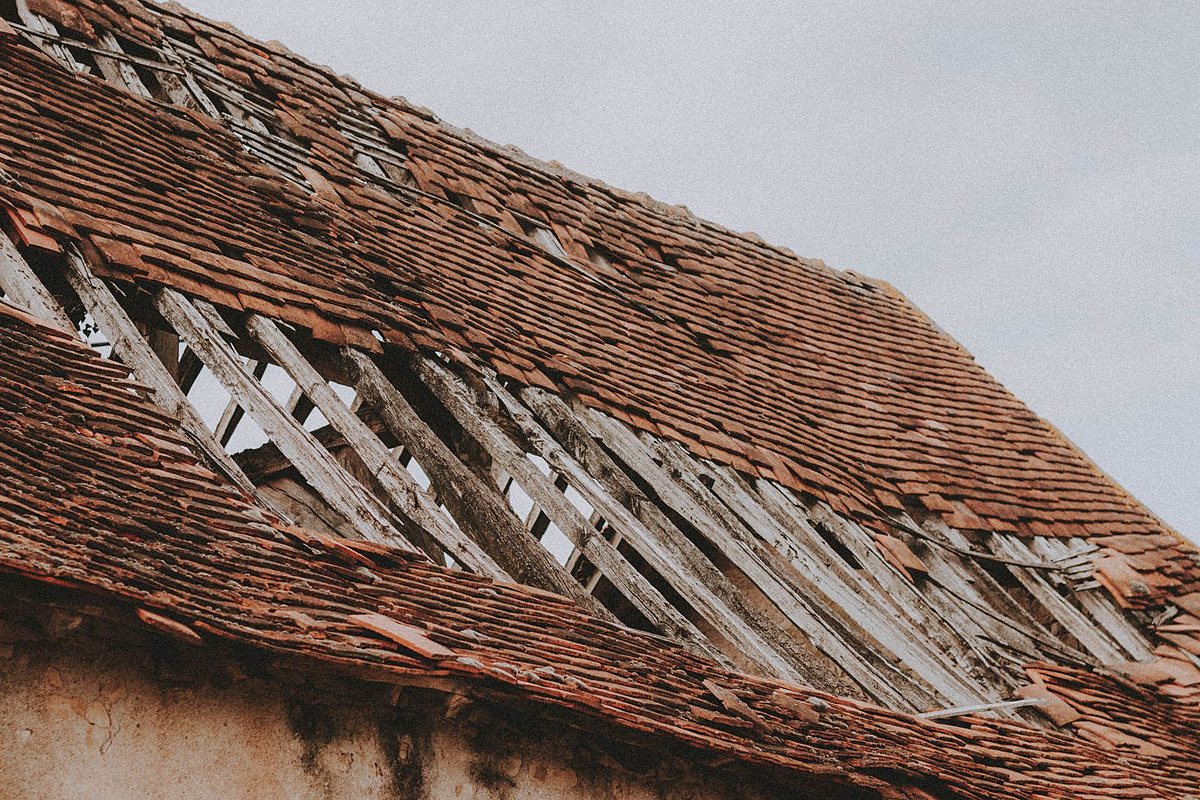
- Widespread curling, exposed mat and multiple leaks point to replacement.
- One isolated leak, a cracked boot or a few lifted tabs is usually a repair.
- Algae streaks are cosmetic; brown ceiling rings are not.
- Soft decking and sagging are structural warnings, not maintenance items.
- Insurance pressure often decides the timing before the roof fails.
The eight signs that usually mean replacement
1. Shingles are curling, clawing or losing tabs across several slopes
Some edge wear is normal. When the field is visibly distorted across multiple slopes, the shingle has lost its wind resistance and its surface is failing.
2. Granules are collecting in gutters and at downspouts
Granules protect the asphalt from UV. Once they are gone and the fiberglass mat is visible, the roof is near the end.
3. You have had three or more leaks in two years
One leak is a repair. A pattern of leaks in unrelated places means the waterproofing layer is failing broadly.
4. The decking feels soft or the roofline sags
This is structural. It may indicate rot, long-term leakage or inadequate framing — and it needs to be assessed before any new roof is installed.
5. Daylight or water tracks in the attic
Daylight at a penetration means an opening. Water tracks on the rafters mean an active or recurring leak.
6. The roof is 20+ years old and you plan to stay
At that age, a major repair is often poor value. Replacement is usually the better long-term decision if the roof is otherwise sound.
7. Your insurer is asking for replacement or moving you to actual cash value
Florida rules limit how insurers can use roof age, but 15+ year roofs are commonly settled at actual cash value without documentation of remaining life. Sometimes replacement is the only way to keep replacement-cost coverage.
8. Storm damage is widespread, not isolated
If wind or hail affected multiple slopes, patching rarely restores the roof's integrity. An adjuster and a roofer should assess the whole roof.
Three things that are usually a repair
1. One isolated leak with a clear cause
A cracked pipe boot, a failed skylight seal or a lifted step flashing can usually be repaired properly for a few hundred dollars. The roof does not need replacing because one component failed.
2. Algae streaks
The dark streaks on north-facing shingles are usually Gloeocapsa magma, a stain that feeds on shingle filler. It is cosmetic, not structural. It can be cleaned carefully and does not mean the roof is failing. See black streaks on your roof.
3. A few lifted or missing shingles after wind
If the surrounding field is sound and the damage is localized, a repair with matching material is the right call. The key word is localized — have it inspected rather than guessing.
We would rather repair a roof with life left in it than sell a replacement. Ask any contractor to show you the photos and explain what they are seeing.
How to check your own roof safely
You can inspect from the ground and the attic without climbing:
- Use binoculars from several angles to look for missing, lifted or curled shingles.
- Check gutters for granules and shingle fragments.
- Look at the ceiling and walls for stains, especially after wind-driven rain.
- In the attic, look for daylight, water tracks, damp insulation and crushed ventilation.
- Check the fascia and soffit for soft wood, peeling paint or pest activity.
- Look at the roof edge after storms for lifted drip edge or loose gutter.
Do not walk a steep, wet or tile roof. A fall is a much bigger problem than a roof question.
Want a second opinion on your roof?Call and describe what you are seeing — we will give you a straight answer before anyone climbs up.
Call (352) 614-6215The age myth: why 15 years is not automatically “done”
Roof age is a starting point, not a verdict. A 17-year-old roof with good ventilation, shade and no leaks may have several years left. A 12-year-old roof with a hot west-facing slope and blocked soffits may be finished.
What matters is condition, not just the calendar:
- How much granule loss is visible?
- Are the shingles still flexible, or brittle?
- Is the decking sound?
- Is the flashing intact?
- Is there a leak history?
A documented inspection answers those questions. It also gives you a defensible position with an insurer or a buyer who is asking about age.
Making the call without pressure
Ask for three things from any contractor recommending replacement:
- Photos of what they are describing. Curling, granule loss, failed flashing, soft decking — all visible.
- A written scope and price for the recommended work, itemized.
- The alternative. What would a repair cost, and how long would it realistically last?
If a contractor cannot answer those three questions clearly, get a second opinion. Replacement is sometimes the right answer — but it should be a conclusion, not a sales script.
Want this checked on your roof?Call (352) 614-6215 and we will inspect it, photograph what we find and tell you what it needs.
Call (352) 614-6215Questions & answers
Common questions
Short answers related to this guide.
How do I know if my roof needs replacing or just repairing?
If the damage is localized and the rest of the roof is sound, repair. If leaks are recurring across multiple areas, the shingles are failing broadly or the decking is soft, replacement is usually the better investment.
Can a roof with missing shingles be repaired?
Yes, if the surrounding shingles are still sound and a matching material is available. A localized repair is often the right first step. If the damage covers multiple slopes, replacement may be more economical.
Is algae on my roof a sign of failure?
No. Algae staining is cosmetic and common in humid climates. It does not mean the roof is leaking or structurally compromised, though it can be cleaned and prevented with algae-resistant shingles at replacement.
How long can I wait if my roof is leaking?
Not long. Even a slow leak damages insulation, drywall and framing and can lead to mold. If water is active, get temporary protection immediately and schedule the repair.
Will a new roof increase my home's value?
It often does, especially in Florida where buyers and insurers care about roof age. A documented installation with a transferable warranty is more valuable than an undocumented one.
Roofer in Gainesville serves homeowners across Alachua County and North Central Florida.
Published February 2, 2026 · Updated November 8, 2026 · Gainesville Roofing FL, Gainesville, Florida.