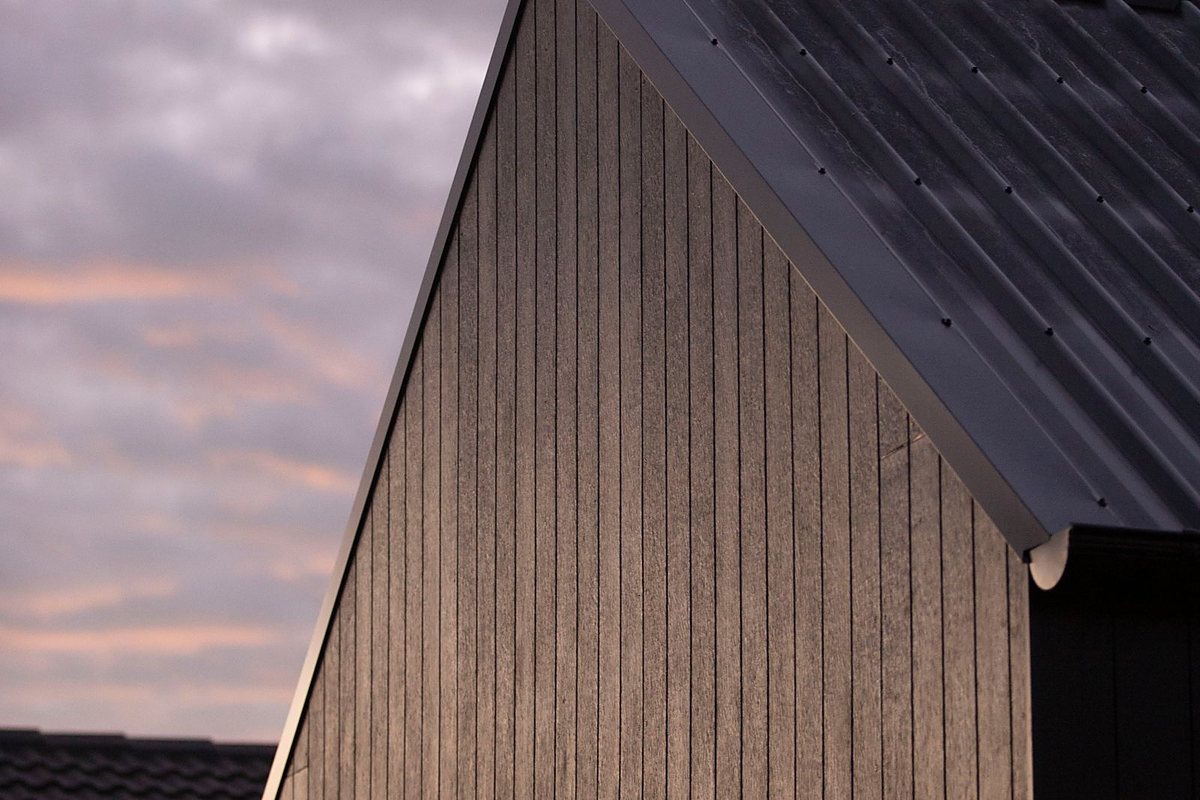
Metal roof systems we install
Three systems cover most homes and outbuildings in North Central Florida:
Standing seam
The premium option. Panels are roll-formed with raised seams and attached with concealed clips, so there are no exposed fasteners through the roof surface. Excellent wind performance, clean appearance and the longest service life. Also the most expensive and the least forgiving of poor installation.
Exposed-fastener panels (5V crimp, R-panel)
Economical, fast to install and common on barns, workshops, porches and rental properties. The panels are screwed down through washers. The weak point is the fastener: the washer degrades over time and needs periodic inspection and replacement.
Metal shingles and stone-coated steel
Designed to mimic tile or shingle while weighing far less. Useful where a homeowner wants a tile look without the structural load, common on newer builds around Jonesville and Newberry.
Why metal suits Florida roofs
Metal handles the three things that destroy roofs here: sun, rain and wind.
- Heat: reflective finishes and above-sheathing ventilation reduce attic heat gain compared with dark asphalt shingles.
- Rain: metal sheds water quickly, and smooth panels do not trap the live oak litter that rots shingle valleys.
- Wind: properly fastened standing seam systems hold up to hurricane-force winds far better than shingles.
- Longevity: 40–50 years is realistic, which changes the cost-per-year math even when the upfront price is higher.
- Algae: metal does not support the algae that streaks north-facing shingles.
It is not automatically the right choice. Metal costs more, can be louder in heavy rain without proper decking and insulation, and requires contractors who understand the details. We will tell you if your house is a good candidate.
Comparing metal to shingles?Call and describe what you are seeing — we will give you a straight answer before anyone climbs up.
Call (352) 614-6215What correct metal installation looks like
Most metal roof failures are installation failures, not material failures. The details that matter:
- Substrate and underlayment: a high-temperature synthetic membrane suited to metal, not standard felt that cooks and tears.
- Fastening: correct clip spacing, screw placement in the flat of the panel, and washers rated for the material.
- Thermal movement: panels expand and contract. Fixed improperly, they oil-can, loosen fasteners and open seams.
- Trim and closures: ridge, hip, eave and gable trim installed with matching closures so wind-driven rain cannot enter.
- Penetrations: boots and flashings designed for metal, not generic neoprene slapped on with sealant.
- Cutting: metal shavings must be cleaned up immediately or they rust and stain the roof.
Ask any metal contractor how they handle thermal movement and penetrations. The answer tells you most of what you need to know.
Metal roof repair and maintenance
Metal roofs are low maintenance, not no maintenance. On existing roofs we repair:
- Loose or missing fasteners and failed washers.
- Backed-out screws and enlarged holes, which need a larger fastener and a proper seal — not silicone over the head.
- Open seams and lifted ridge caps.
- Dented or creased panels from limbs and hail.
- Leaking penetrations and failed pipe boots.
- Scratched or chalking paint, which can be recoated if addressed early.
An annual inspection after hurricane season is worth it. Most metal repairs we do would have been a $150 fastener check if caught earlier.
What metal roofing costs in Gainesville
Budget ranges for planning:
- Exposed-fastener panel roof: roughly $12,000–$22,000 for a typical home.
- Standing seam: commonly $18,000–$38,000, higher for complex roofs and premium finishes.
- Metal over existing shingles (where permitted and structurally appropriate): less than a full tear-off, but not always advisable.
- Fastener and seal repairs: $300–$1,500 depending on scope.
We quote the full system — panels, underlayment, trim, fasteners, permit and labor — so the number is comparable to a shingle quote rather than a misleading base price.
Ready to get a real answer?Call (352) 614-6215 and describe what your roof is doing. Written estimates across Gainesville and Alachua County.
Call (352) 614-6215Questions & answers
Frequently asked questions
Straight answers about metal roofing in Gainesville.
Is a metal roof too loud in the rain?
Not when it is installed over solid decking with underlayment and attic insulation. The romantic “drum” effect comes from metal over open purlins, which is common on barns, not homes. Most homeowners describe the sound as rain on a good roof.
Will a metal roof lower my insurance premium?
It can, because of wind and hail resistance and documented fastening. The discount depends on your carrier and the specific system. We provide the installation documentation your agent needs to check.
Does a metal roof attract lightning?
No. Metal does not increase the likelihood of a strike; it conducts current safely to ground if struck. The myth comes from confusing conductivity with attraction.
Can you put metal over my existing shingles?
Sometimes, if the structure can carry the load, the decking is sound and local code allows it. We usually recommend tear-off so the deck can be inspected and the new roof starts from a clean surface. We will explain the trade-offs either way.
How long does a metal roof last in Florida?
Commonly 40 to 50 years for quality standing seam with proper fasteners and finish. Exposed-fastener panels can last as long, but the washers and screws need periodic replacement.
Can you repair a metal roof another company installed?
Yes. We repair panels, fasteners, seams and penetrations on most systems. If we cannot source matching panels, we will tell you before starting and propose the closest alternative.
Gainesville's roofing company handles roof replacement, repair and storm response across Alachua County.