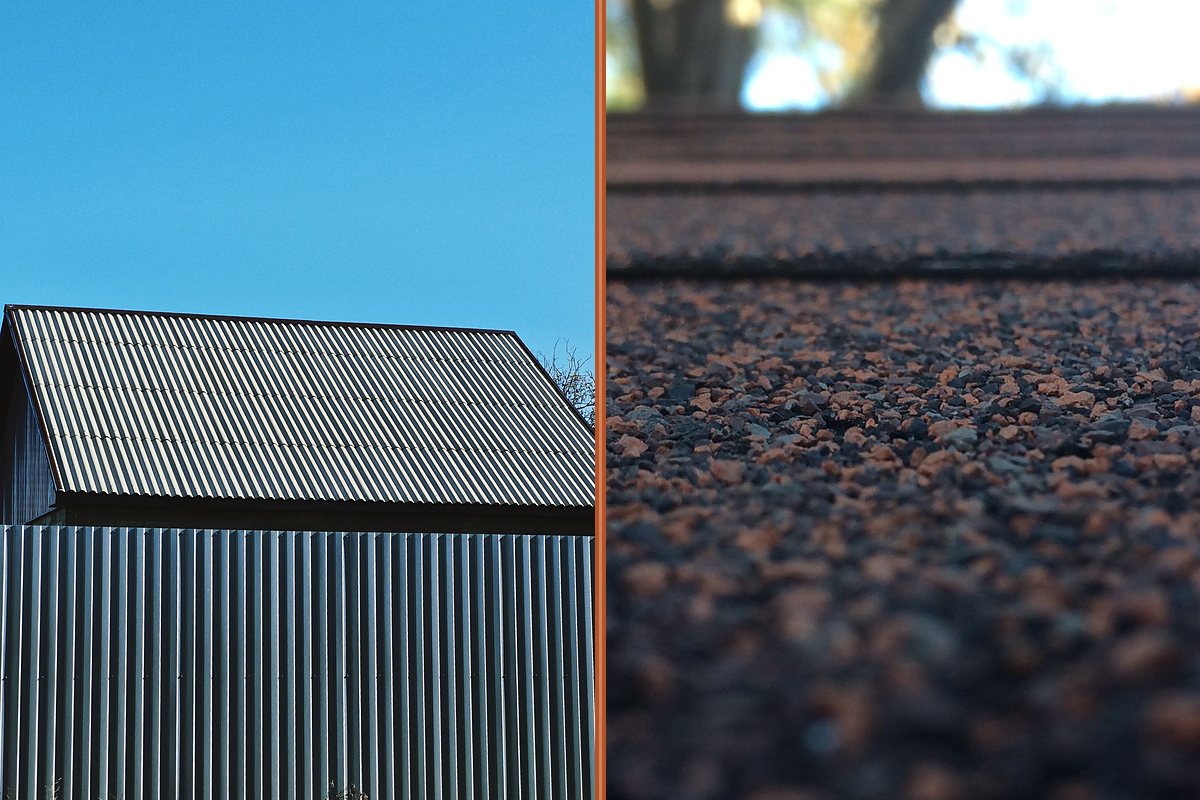
- Metal costs roughly 1.5–2x shingles upfront but lasts 2–3x longer.
- Standing seam performs best in wind; exposed-fastener panels need fastener maintenance.
- Metal reflects heat better; shingles are quieter in rain.
- Both need proper underlayment, flashing and ventilation to perform.
- Insurance discounts depend on the system and documentation, not the label.
Side-by-side comparison
| Architectural shingle | Standing seam metal | |
|---|---|---|
| Installed cost (typical home) | $9,500–$18,000 | $18,000–$38,000 |
| Service life in North Florida | 15–20 years | 40–50 years |
| Wind performance | Good when rated and nailed correctly | Excellent with concealed fasteners |
| Heat / reflectivity | Dark shingles absorb heat | Reflective finishes reduce heat gain |
| Noise in rain | Quiet | Quieter than expected over solid decking |
| Maintenance | Low; repairs straightforward | Low; fastener and seam checks |
| Algae resistance | Requires algae-resistant granules | Not susceptible |
| Resale appeal | Familiar, neutral | Strong in rural and custom markets |
| Repairability | Easy to patch | Requires matching panels and skill |
Both are legitimate choices. Neither is “best” in isolation.
The cost-per-year math
A $14,000 shingle roof lasting 18 years costs about $780 per year before maintenance. A $26,000 standing seam roof lasting 45 years costs about $578 per year.
On that basis, metal wins over a long horizon. But the comparison is not that simple:
- The metal roof's higher upfront cost has an opportunity cost — that money could do something else.
- Metal may need fastener or finish maintenance over 45 years.
- If you sell in eight years, you may not recoup the premium in resale.
- Shingle technology and prices will change by the time the metal roof is due.
A reasonable rule: if you plan to stay 15+ years and the structure suits metal, the long-run math often favors it. If you are moving in five years, shingles usually make more sense.
How each performs in Gainesville conditions
Heat
Metal reflects solar radiation and can reduce attic heat gain, especially with a reflective finish and proper ventilation. Dark asphalt shingles absorb heat. The difference is real but smaller than some sales pitches suggest if the attic is well insulated and ventilated.
Wind
Standing seam with concealed fasteners is the stronger wind assembly. Shingles rely on sealant strips and correct nailing; once the seal breaks, uplift begins. Exposed-fastener metal is only as good as its washers and screws.
Rain and debris
Metal sheds oak litter and does not trap moisture in valleys the way shingles can. Shingle valleys are a common debris trap under Gainesville's live oaks.
Noise
Over solid decking and insulation, metal is not dramatically louder than shingles. Over open purlins — common on barns — it is.
Algae
Metal does not host the algae that streaks shingles. That is a genuine cosmetic advantage in this climate.
Want a second opinion on your roof?Call and describe what you are seeing — we will give you a straight answer before anyone climbs up.
Call (352) 614-6215Structural and installation considerations
Metal is not always an option. Considerations:
- Weight: standing seam is generally lighter than tile and comparable to or lighter than shingles, but the structure still needs to be checked.
- Decking: metal performs best over solid decking with high-temperature underlayment.
- Thermal movement: panels expand and contract; fastening must allow for it.
- Penetrations: every vent and pipe needs a metal-specific flashing, not a generic boot.
- Installers: fewer contractors install metal well. Ask for local references and look at the trim details.
Shingles are more forgiving and more widely available. That matters if you need a repair quickly or a future owner needs to match material.
Insurance and resale
Insurance. Wind mitigation credits depend on documented features: roof shape, deck attachment, roof-to-wall connections, secondary water barrier and opening protection. A new metal roof can score well, but so can a well-installed shingle roof. Ask your agent before choosing based on premium assumptions.
Resale. Shingles are the familiar, neutral choice that appeals to the broadest buyer pool. Metal is a strong selling point for rural properties, custom homes and buyers who plan to stay. In some neighborhoods, an HOA may restrict metal entirely — check before you fall in love with it.
Insurability. A new roof of either type generally helps. The documentation matters as much as the material.
Want this checked on your roof?Call (352) 614-6215 and we will inspect it, photograph what we find and tell you what it needs.
Call (352) 614-6215Questions & answers
Common questions
Short answers related to this guide.
Is a metal roof worth the extra cost in Florida?
If you plan to stay 15+ years, the structure suits metal and you value longevity and lower heat gain, often yes. If you are moving soon, shingles usually deliver better immediate value.
Does a metal roof increase home insurance?
Usually not — it can reduce wind premiums when the installation is documented. The discount depends on the system and your carrier, so confirm with your agent.
Is a metal roof noisy in the rain?
Not over solid decking with underlayment and attic insulation. The loud metal-roof experience usually comes from barns with open purlins.
Can you walk on a metal roof?
Only with proper footwear and caution, and some finishes dent or scratch easily. Homeowners should not walk one. Repairs should be done by someone experienced with the specific panel.
Which lasts longer, metal or shingles?
Metal, by a wide margin: 40–50 years for standing seam versus 15–20 for architectural shingles in this climate. The upfront cost is correspondingly higher.
Our locally owned roofing company covers all of Alachua County, including the surrounding towns.
Published March 5, 2026 · Updated November 8, 2026 · Gainesville Roofing FL, Gainesville, Florida.